


News
PSU students help determine Cully neighborhood’s walkability needs

Three Portland State University graduate students in the Nohad A. Toulan School of Urban Studies and Planning used GIS technology to collect and analyze residents’ thoughts about walkability needs for Portland, Oregon’s northeast Cully neighborhood.
Tags: active transportation, livability, portland state university, social equity, walking
Emerging field of HIA helps to assess the public health impact of future plans

New research from NITC looks at Health Impact Assessment, or HIA, in transportation planning.
Tags: active transportation, design, livability, nitc, portland state university
NITC program awards funding for new round of research, education projects

- An analysis of the effects of commuter rail on population deconcentration.
- A look into prioritizing pedestrians at signalized intersections.
- A study of cyclist-vehicle interaction.
- An evaluation of an eco-driving intervention.
Tags: bicycle infrastructure, complete streets, cycle tracks, e-bikes, green lanes, light rail, national institute for transportation and communities, nitc, otrec, traffic-related pollution, transit, transit equity, transportation safety, university of utah, utah transit authority, walking
Safety thread runs through sixth Oregon Transportation Summit

What is the highest number of deaths and serious injuries we should accept from our transportation system? For transportation agencies who have long sought to reduce traffic fatalities, a movement to eliminate them completely has gained currency.
This year’s Oregon Transportation Summit brings a strong safety theme, including plenary session and morning and afternoon workshops. Registration for the summit officially opens today.
Register or learn more about the summit, which takes place Monday, Sept. 15.
The 2014 Oregon Transportation Summit opens with a plenary session titled “Envisioning Vision Zero.” Vision Zero is the approach, initiated in Sweden, to not accept deaths or serious injuries as a tradeoff for other goals of the road network. In the United States, a national effort called Toward Zero Deaths grew out of these principles.
Minnesota Toward Zero Deaths has been a leader among state programs, working with partners across jurisdictions and service categories across the state to address roadway deaths and injuries. Sue Groth oversees this effort as the state traffic engineer and director of the Office of Traffic, Safety and Technology for the Minnesota Department of Transportation.
OTREC is pleased to have Groth deliver the summit’s plenary address. Groth will give context on Toward Zero Deaths and describe how this philosophy now guides her department. Alongside Minnesota, Oregon has also identified zero transportation deaths as a core objective in its strategic highway safety plan. The Oregon Department of Transportation’s Safety Division Administrator Troy Costales will follow Groth’s presentation with a response focused on Oregon’s efforts.
Biographies for Groth, Costales and other speakers are at the OTS Speaker Biographies Page.
Tags: jarrett walker, leah treat, minnesota department of transportation, oregon transportation summit, safety, sue groth, toward zero deaths, troy costales, vision zero
Light rail reduces auto traffic, cuts emissions, study finds
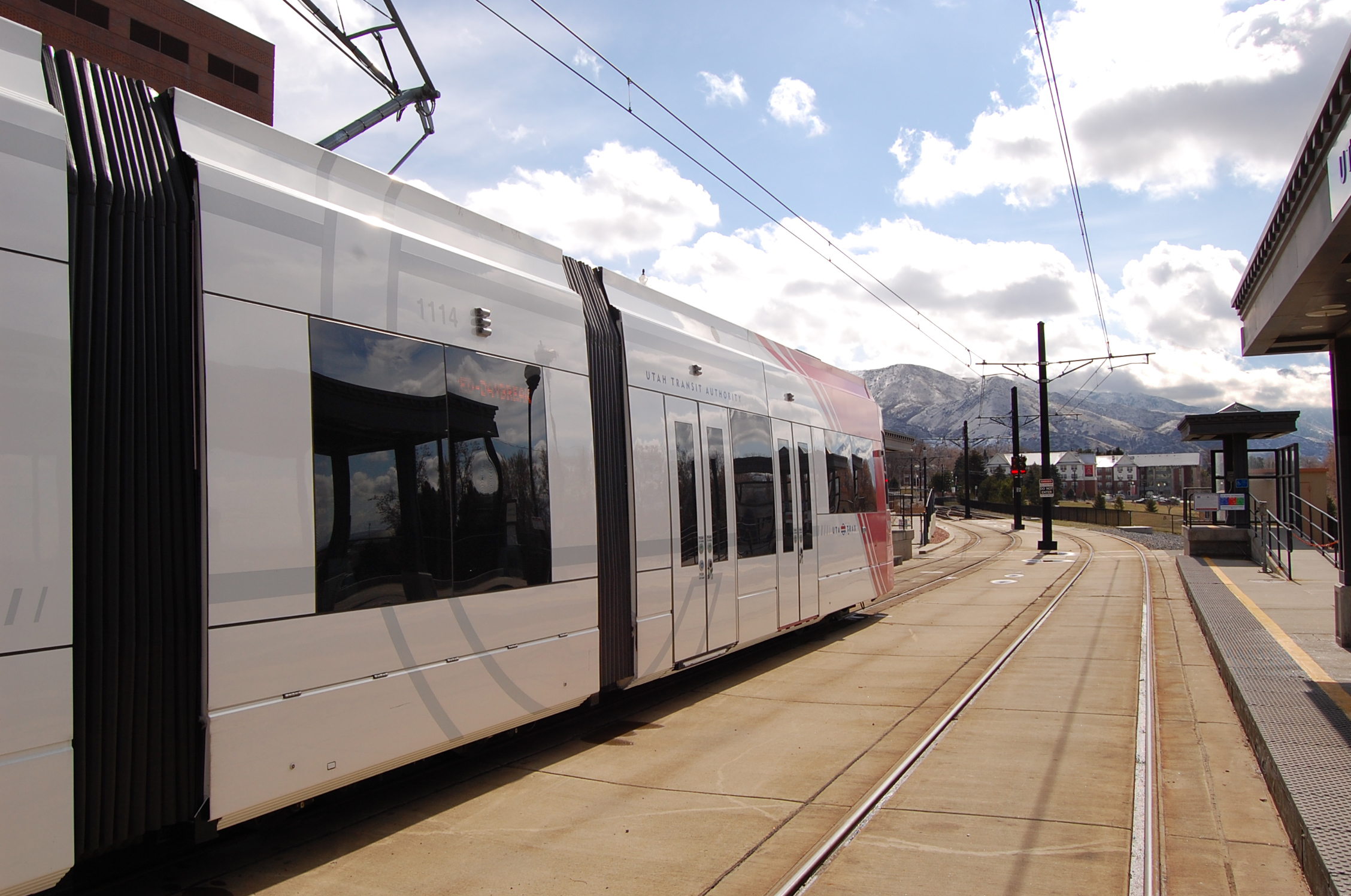
For the first time, researchers have shown that installing light rail on an existing travel corridor not only gets people out of their cars, but reduces congestion and air pollution.
In the study, planners at the University of Utah measured impacts of a new light rail line in Salt Lake City (University Line) on an existing major thoroughfare (400/500 South). Their analysis showed that traffic near the University has fallen to levels not seen since the 1980s, even as the number of students, faculty and staff at the university has increased, and the commercial district along the corridor has expanded.
"This is the first study to document important effects of light rail transit on traffic volumes,” said Reid Ewing, professor of city and metropolitan planning at the University of Utah and lead author on the study. “Since the University TRAX line opened, there has been increased development in the 400/500 South travel corridor, yet traffic on the street has actually declined. Our calculations show that without the University TRAX line, there would be at least 7,300 more cars per day on 400/500 South, and possibly as many as 21,700 additional cars. The line avoids gridlock, as well as saves an additional 13 tons of toxic air pollutants. This is important knowledge for shaping future transportation policies.”
Andrew Gruber, executive director of the Wasatch Front Regional Council, which has been responsible for coordinating transportation planning in the Salt Lake and Ogden areas since 1973 said, “This study further demonstrates the value of public transportation in helping people reach their destinations, reduce traffic and spur economic development. The findings are significant for local governments across our region as they consider the future of transit in their community.”
The report—which validates assumptions widely used in travel demand models used in community planning—was issued recently by the National Institute for Transportation and Communities, and has been accepted for publication in the Journal of Public Transportation later this year. The report is available for download at http://theotrec.org/project/611.
Ewing worked with Guang Tian, a doctoral student in city and metropolitan planning, and Allison Spain, academic program manager at the University of Utah.
Tags: development, emissions, guang tian, light-rail transit, nitc, reid ewing, traffic, traffic congestion, transit, university of utah, utah department of transportation, utah transit authority
Archives
Categories
Filter By University
- Portland State University
- University of Oregon
- Oregon State University
- Oregon Institute of Technology
OTREC's Most Used Tags
active transportation alex bigazzi bicycle bicycle infrastructure bicycling chris monsere design e-bikes electric vehicles emissions hau hagedorn ibpi institute of transportation engineers jennifer dill john macarthur karen dixon kelly clifton krista nordback livability livemove marc schlossberg metro miguel figliozzi nico larco nitc oregon department of transportation oregon institute of technology oregon transportation summit otrec portland state university proposals psu public transportation region x region x consortium research rfp rita robert bertini step sustainable cities initiative transit transportation modeling transportation research board trb trimet university of oregon university of utah visiting scholars program walking